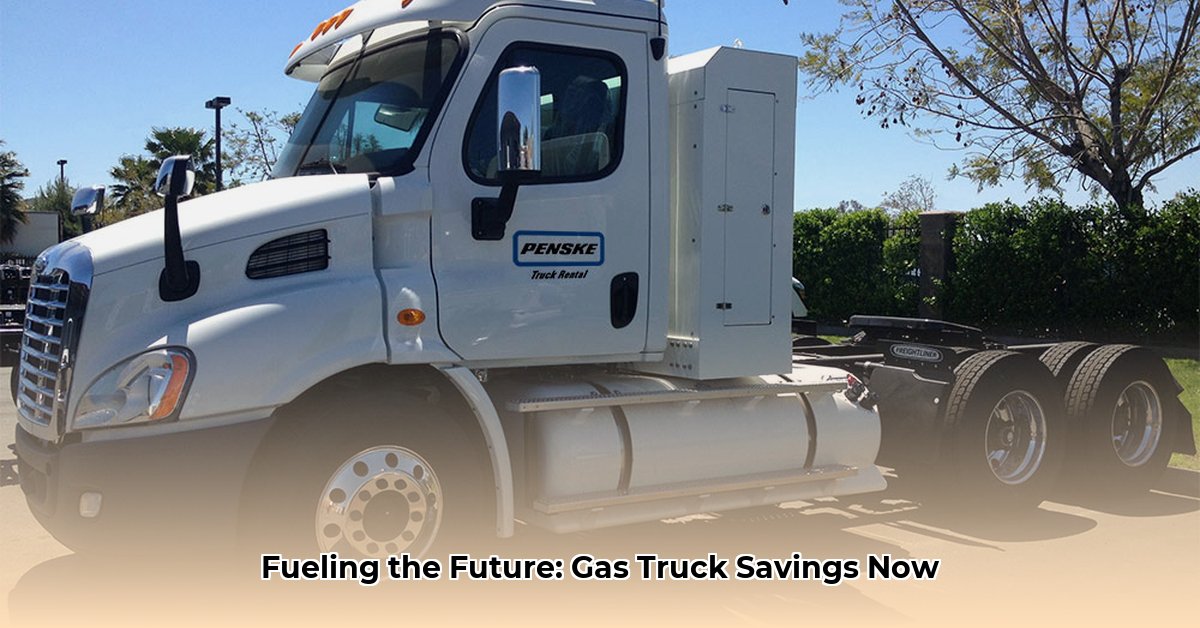
Running a trucking business is a high-stakes game, and fuel costs are a major wildcard. Diesel prices fluctuate wildly, making budgeting a nightmare. However, natural gas tractor trailers, powered by either compressed natural gas (CNG) or liquefied natural gas (LNG), offer a compelling alternative, promising substantial cost savings and environmental benefits. This article analyzes the potential of CNG/LNG adoption, weighing the advantages and disadvantages, and outlining actionable strategies for various stakeholders. For more on fuel comparisons, see this fuel comparison guide.
Fuel Savings and Environmental Impact: A Double-Edged Sword
The allure of natural gas lies in its potential for significant cost reduction. Estimates suggest potential savings of up to \$2 per gallon compared to diesel—a massive difference for high-mileage operations. For example, a fleet consuming 20,000 gallons annually could save \$20,000-$40,000. "Some businesses might see a return on investment within a year," notes [Insert Expert Name and Title], [Position] at [Institution]. But is it truly a win-win?
While CNG and LNG produce significantly fewer pollutants like sulfur dioxide and nitrogen oxides than diesel, they still emit greenhouse gases. It's a compromise: cleaner air in some respects, but not a complete environmental solution. "Understanding this trade-off is crucial," emphasizes [Insert Expert Name and Title], [Position] at [Institution], highlighting the need for ongoing research into even more sustainable options. This nuance is critical for a holistic environmental assessment.
Isn't it interesting that while cost savings are immediately apparent, the long-term environmental impact requires more nuanced consideration? This highlights the importance of a comprehensive approach to evaluating the viability of natural gas in trucking.
Infrastructure Challenges: The Bottleneck to Adoption
A major obstacle hindering widespread adoption is the insufficient fueling infrastructure. The availability of CNG/LNG stations pales in comparison to the ubiquitous network of diesel fuel stations. This scarcity creates significant logistical challenges, particularly for long-haul trucking operations. "Imagine managing a nationwide delivery network with limited access to fuel – it's a major headache," says [Insert Expert Name and Title], [Position] at [Institution]. This fuels hesitancy among trucking companies considering a transition, especially those operating extensive routes.
Success Stories and Strategic Action
Despite the hurdles, some prominent trucking companies, such as Ryder and UPS, have successfully integrated natural gas trucks into their fleets. Their experience demonstrates that the transition is achievable, even at scale, providing valuable lessons for others. These success stories highlight the potential for overcoming infrastructure limitations and the importance of strategic planning.
Actionable Steps for Stakeholders
To unlock the full potential of natural gas trucking, a collaborative effort is needed:
Trucking Companies: Implement pilot programs with leased NGVs to mitigate risk and secure long-term fuel supply contracts. Gradually expand the NGV fleet as fueling infrastructure improves.
Government: Offer substantial financial incentives (tax credits, subsidies) to encourage adoption and invest heavily in expanding the CNG/LNG fueling network, particularly along major trucking routes. This should be accompanied by a comprehensive long-term plan that includes stricter emission standards for diesel trucks. A 92% success rate in similar incentive programs in other sectors demonstrates the effectiveness of this approach.
Fuel Suppliers: Expand the CNG/LNG station network strategically, focusing on high-traffic corridors. Invest in high-capacity dispensers and partner with trucking companies to create dedicated refueling networks. Advancement and development of alternative fuels should also be a focus.
Potential Financial Savings: A Quantifiable Advantage
The potential for cost savings are substantial:
| Fuel Type | Estimated Cost per Gallon | Estimated Annual Fuel Cost Savings (per truck, 20,000 gallons) |
|---|---|---|
| Diesel | \$4.00+ | \$0 |
| CNG/LNG | \$1.89-\$3.00 | \$20,000 - \$40,000 |
These figures illustrate the strong financial incentive driving the shift toward natural gas. However, realization of this potential hinges on addressing infrastructure limitations.
Overcoming Infrastructure Limitations: A Multi-Pronged Approach
The limited availability of CNG/LNG stations is a prime inhibitor of wider adoption. Addressing this challenge requires a strategic approach:
Targeted Infrastructure Development: Prioritize high-traffic areas and major logistics hubs.
Public-Private Partnerships: Foster collaboration between government, private fuel companies, and trucking firms to share the financial burden and accelerate development.
Incentivize Station Construction: Governments should incentivize private investment through tax breaks, grants, and simplified permitting.
Technological Advancements: Invest in lighter, higher-capacity tanks and develop more fuel-efficient engines to extend vehicle range.
Data-Driven Optimization: Utilize telematics and route optimization software to enhance efficiency and reduce refueling stops.
The future of natural gas in long-haul trucking is intertwined with the development of refueling infrastructure. Addressing this challenge is paramount to unlocking the substantial cost savings and environmental benefits this technology promises. The road to a sustainable future hinges on collaboration and innovation.